Leaving Cert Biology — Now Live●More subjects coming soon●Leaving Cert Biology — Now Live●More subjects coming soon●Leaving Cert Biology — Now Live●More subjects coming soon●Leaving Cert Biology — Now Live●More subjects coming soon●
Free Sample Lesson
Leaving Cert Biology, Now Live
GetStuck In.
A visual memory platform for the Irish Leaving Cert. Stop blanking in exams. Start building memories that last.
Built on the Method of Loci, used by memory champions and medical students for centuries.
65%
of surveyed students blank in exams despite extensive study
The Method
Utilises proven memorisation techniques used by medical students, world memory champions, and TED Talk speakers
100
Irish LC and JC students surveyed, confirming the problem is widespread
The Method
How Stuck-In Works
Every lesson is built on the Method of Loci, one of the most validated memory techniques in existence.
1
Enter the Scene
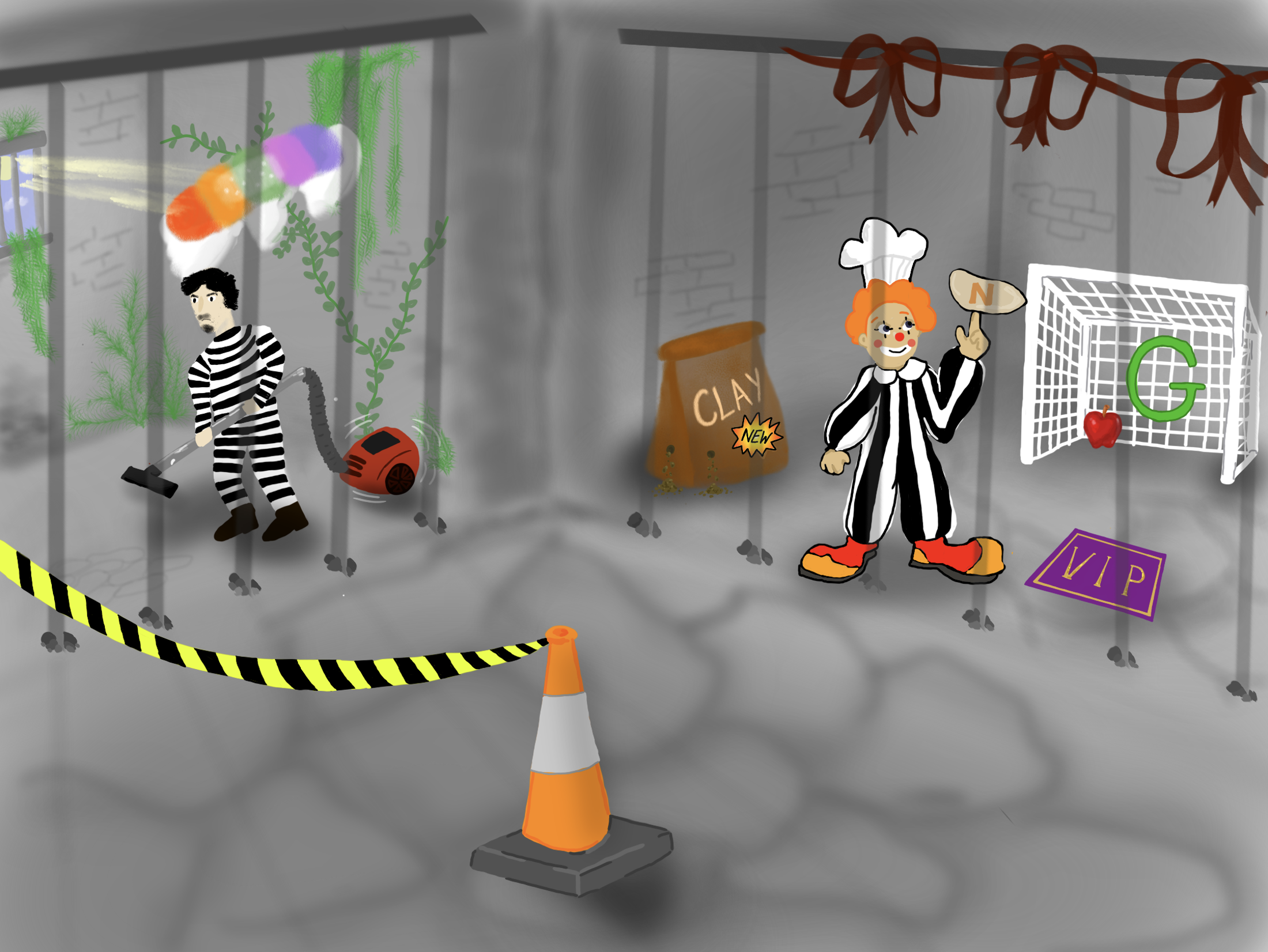
Each lesson is a hand-illustrated scene where every character, object, and action encodes a specific curriculum fact: its name and what it does. Nothing in the image is decoration.
2
Lock It In
A guided walkthrough reveals each element one by one, building the full scene in your memory. Every fact comes from the SEC marking scheme, so what you learn is exactly what earns marks.
3
Prove It
Past paper questions test your recall. When you need a hint, the scene comes back. When you see the answer, the relevant part of the image is highlighted, reinforcing the connection.
Biology, Unit 2
Available Lessons
Biology
Cell Organelles
Unit 2: Cell Structure
🔒
Biology
Cell Division
Coming soon
🔒
Biology
Photosynthesis
Coming soon
🔒
Biology
Respiration
Coming soon
Biology
Unit 2: Cell Structure
1 in progress
4 not started
0 completed
5m
Cell Organelles
In progress
▶☰
Coming Soon
Cell Division
Not started
Photosynthesis
Not started
Respiration
Not started
Biology › Unit 2: Cell Structure › Cell Organelles
35% complete
Cell Organelles
Leaving Cert Biology
Lesson Summary
Cell organelles are the specialised structures within a cell that carry out specific functions.
In this lesson, the prison memory palace separates plant-only organelles (left cell) from shared organelles (right cell).
Every visual element in the scene encodes both the name of the organelle and its biological function.
Use the Summary tab to review all key terms, then test yourself in the Quiz tab.
Summary Notes
Plant Cell Only
Cell Wall
Provides rigid structural support for the plant cell. Made of cellulose.
Vacuole
Stores water. Maintains turgor pressure within the cell.
Chloroplast
Site of photosynthesis. Converts light energy into glucose.
Plant and Animal
Cell Membrane
Controls what substances pass through the cell. Selective permeability.
Cytoplasm
Fluid medium that suspends and supports all organelles within the cell.
Mitochondrion
Site of cellular respiration. Produces ATP (energy) for the cell.
Nucleus
Control centre of the cell. Contains DNA in the form of chromosomes.
Nuclear Pore
Allows transfer of material between the nucleus and the cytoplasm.
Ribosome
Site of protein synthesis. Produces proteins for the cell.
SEC Marking Scheme Definitions
Accepted wording from LC Biology marking schemes. Use these exact terms in exam answers to secure full marks.
Cell Wall
Provides rigid / structural support for the cell (accept: made of cellulose)
Vacuole
Stores water / maintains turgor pressure
Chloroplast
Site of photosynthesis / converts light energy to glucose / converts light energy to chemical energy
Cell Membrane
Controls what substances pass through / selective permeability / controls entry and exit of materials
Cytoplasm
Fluid medium of the cell / contains organelles / site of cell reactions
Mitochondrion
Site of cellular respiration / produces ATP / powerhouse of the cell
Nucleus
Control centre of the cell / contains chromosomes (DNA) / controls cell activity
Nuclear Pore
Allows transfer of material between the nucleus and the cytoplasm
Ribosome
Site of protein synthesis / makes / produces proteins
Question 1 of 4
Score: 0 / 4
Fig. 1: Ultrastructure of a plant cell (LC Past Paper, Q7)
Hint: Find it in the scene
Quiz Complete
Well done.
0/4
Go back to the lesson or summary to reinforce anything you missed, then try the quiz again.
Curriculum
All Courses
Launching with Leaving Cert Biology. More subjects are added as the content library grows.
Biology
Leaving Certificate
Chemistry
Leaving Certificate
Geography
Leaving Certificate
History
Leaving Certificate
Physics
Leaving Certificate
Agricultural Science
Leaving Certificate
Biology: Unit 1: Organisation of Life▼
Biology: Unit 2: Cell Structure and Processes▲
Cell OrganellesOpen
Cell Division🔒
Photosynthesis🔒
Respiration🔒
Biology: Unit 3: Interactions of Life▼
Past Papers
QBank
Questions drawn from Leaving Cert past papers, organised by topic. Work through them one at a time.
Biology
LC Past Paper: Q7(b)
Name the part labelled A in the plant cell diagram and give one function of this part.
Cell Organelles · 4 marks
Biology
LC Past Paper: Q7(c)
Is the cell above a prokaryotic cell or a eukaryotic cell? Justify your answer.
Cell Organelles · 4 marks
Biology
LC Past Paper: Q7(d)
Give the function of the nuclear pore.
Cell Organelles · 3 marks
Biology
LC Past Paper: Q7(e)
The plant cell shown is turgid. Briefly describe how plant cells can remain turgid.
Cell Organelles · 6 marks
Reference
Summary Notes
Key marking scheme terms for every topic. Bold terms earn marks in the exam.
Biology: Unit 2: Cell Organelles
▲
Plant Cell Only
Cell Wall
Provides rigid structural support for the plant cell. Made of cellulose.
Vacuole
Stores water. Maintains turgor pressure within the cell.
Chloroplast
Site of photosynthesis. Converts light energy into glucose.
Plant and Animal
Cell Membrane
Controls what substances pass through. Selective permeability.
Cytoplasm
Fluid medium that suspends and supports all organelles.
Mitochondrion
Site of cellular respiration. Produces ATP for the cell.
Nucleus
Control centre of the cell. Contains DNA as chromosomes.
Nuclear Pore
Allows transfer of material between nucleus and cytoplasm.
Ribosome
Site of protein synthesis.
SEC Marking Scheme Definitions
Accepted wording from LC Biology marking schemes. Use these exact terms in exam answers to secure full marks.
Cell Wall
Provides rigid / structural support for the cell (accept: made of cellulose)
Vacuole
Stores water / maintains turgor pressure
Chloroplast
Site of photosynthesis / converts light energy to glucose / converts light energy to chemical energy
Cell Membrane
Controls what substances pass through / selective permeability / controls entry and exit of materials
Cytoplasm
Fluid medium of the cell / contains organelles / site of cell reactions
Mitochondrion
Site of cellular respiration / produces ATP / powerhouse of the cell
Nucleus
Control centre of the cell / contains chromosomes (DNA) / controls cell activity
Nuclear Pore
Allows transfer of material between the nucleus and the cytoplasm
Ribosome
Site of protein synthesis / makes / produces proteins
Biology: Cell Division
Coming soon
Biology: Photosynthesis
Coming soon
Recall
Games
Pure recall practice — just you and the facts.
Speed Recall
Name as many facts as you can in 60 seconds. Type each answer and press Enter to fill the bar.
Match Maker
Click a term then its matching definition. Find all pairs without making mistakes.
Scene Builder
Reconstruct the full memory palace scene from scratch — no labels, no hints.
Coming Soon
Speed Recall
60
0 / 0 found
items recalled
Match Maker
Click a term, then click its matching definition. Find all pairs to win.
All matched!
Our Story
About Stuck-In
A visual memory platform for Irish students, built by someone who understands what it means to have too much to remember and not enough time.
Why We Built This
The problem is not effort. It is method.
Stuck-In was built by an Irish medical student who knows what it means to face a high-stakes exam with an enormous volume to memorise. The Leaving Certificate is one of the most memorisation-intensive curricula in Europe. Yet every resource available to students relies on passive methods: rewriting, highlighting, re-reading. These create an illusion of learning without building durable memory.
We built Stuck-In because a better tool exists. It has existed for thousands of years. Students just have never had access to it in a form built for their specific curriculum, their specific exams, and their specific pressure.
The Science
The Method of Loci
The Method of Loci is one of the oldest and most validated memory techniques in existence. Used by ancient Greek orators, modern memory champions, and medical students worldwide, it works by anchoring information to vivid spatial locations inside a mental scene. When you walk through that scene, the information comes with it.
Every Stuck-In lesson is a hand-illustrated scene where each element encodes a specific fact: both the name of the concept and what it does. The image does the remembering. You just have to look.
Spatial Memory
The brain retains location and visual detail far more reliably than abstract text. Placing facts in a scene exploits this innate capacity.
Dual Encoding
Pairing a visual with a spoken label creates two separate memory traces. Both must fail for recall to fail.
Emotional Resonance
Vivid, unusual scenes are remembered more reliably. Every Stuck-In scene is designed to be distinctly memorable.
Our Commitment
The art is human-made. Always.
Every illustration in Stuck-In is hand-drawn by a human artist. That is a deliberate product decision, not a constraint. Research consistently shows that people form stronger emotional connections with human-made art than AI-generated imagery, and emotional connection is exactly how memory works.
Like most products today, Stuck-In was built with AI assistance — from developing the concept to building this website. We are transparent about that. But the art you learn from is entirely human-made, and that will not change. Our students are 16 to 18 year olds who can detect AI-generated imagery intuitively and respond less strongly to it. The scenes that anchor your memories need to feel human. So they are.
Where We Are
NovaUCD. Starting with Biology.
Stuck-In is an Irish product, built for Irish students, covering the Irish Leaving Certificate curriculum. We are launching with Biology and expanding subject by subject as the content library grows.
Support
Help Centre
Answers to common questions, and a contact form if you need anything else.
Frequently Asked Questions
What is the Method of Loci?⌄
The Method of Loci, also called the memory palace technique, is a memorisation strategy that involves placing information inside a vivid imaginary scene. Each element in the scene acts as an anchor for a specific fact. When you mentally walk through the scene, the facts come with it. It has been used for centuries by orators, scholars, and memory champions, and it is the technique that underpins every lesson on Stuck-In.
How does the quiz hint system work?⌄
On the quiz page, when you are given a question, you can click the Hint button to see the full memory palace illustration. This prompts you to find the answer yourself within the scene before selecting an option. After submitting, the correct answer is revealed along with an explanation and a reference back to the relevant part of the image.
Which subjects are available?⌄
Stuck-In currently covers Leaving Certificate Biology, with Cell Organelles available as the first complete lesson. Additional Biology topics are in production. Chemistry, Geography, History, and Physics are on the roadmap. Use the contact form below to request a specific topic.
Is Stuck-In free?⌄
The Cell Organelles lesson is available free with no account required. Full access to the content library, QBank, and games will require a subscription. Pricing will be announced at launch and positioned well below the cost of grind school fees. Sign up to the waitlist to be notified first.
Why is the content hand-illustrated and not AI-generated?⌄
The illustrations are hand-drawn by a human artist. This is a deliberate product decision: the Method of Loci only works when the scene is emotionally resonant, and research shows people form stronger emotional connections with human-made art than AI-generated imagery. Like most products today, Stuck-In was built with AI assistance — including this website — but the art you learn from is entirely human-made, and that will not change.
Contact Us
We aim to respond within 48 hours. For school or institution enquiries, please select the relevant option below.